From the moment a child is born, they are socialized into their environment and taught the subtle cues that will lead them through everyday life. It might be about how you eat with a spoon, about which of the neighbourhood children you’re allowed to play with, or how your hair should be cut.
We learn early what that means. How to dress, what to say, what to find funny, what kind of silence feels awkward. Somewhere between childhood and adulthood, we learn to understand that not only do we want to be accepted, but that in order to be accepted, there is a socially acceptable way we need to ‘perform’.
The human brain is wired to seek belonging. Psychologists trace it back to evolution: being accepted by the group once meant staying alive. So we copy, we mirror, we adapt. We laugh when others laugh, nod when others nod, and avoid saying what might make the air feel heavy.
Over time, groups build quiet rules about what’s acceptable: which interests are “cool,” what opinions are “reasonable,” what appearances are “professional.” These norms start to feel natural, and anything outside them feels wrong. That’s how “normal” becomes a gatekeeper.
On the other hand, feeling rejection is uncomfortable. Within the body, the same part of the human brain that lights up during physical pain activates when we feel social rejection. It’s why we flinch at the idea of being “too different,” even when we know better.
We see it play out in schools where kids mock someone’s lunch or accent, in workplaces that call bias “company culture,” in families that praise conformity as respect. The urge to fit in becomes a moral code. The people who don’t, or perhaps can’t, fit the mold are told to “adjust.”
But if you think about it, “normal” has never been a fixed thing. What’s seen as respectable in one space might be rebellious in another. What’s “too much” today could be aspirational tomorrow. Or tomorrow if we travel to another part of the country or another country entirely, we might see something we have never even thought of before.
Sometimes such differences are reflected in pop culture, where we might feel inspired by Naina from Yeh Jawani Hai Deewani, or moved by the resilience of Geet from Jab We Met, showing that authenticity can challenge the norm and carve new spaces for expression.
And if we are always shrinking something of ourselves to fit into this ever larger world, we never get the full chance to be our authentic and truest self.
The question we should be asking ourselves then is not “What do I do to fit in?” but instead “What am I getting rid of to fit in?” and “How accepting am I of other people’s normal?”
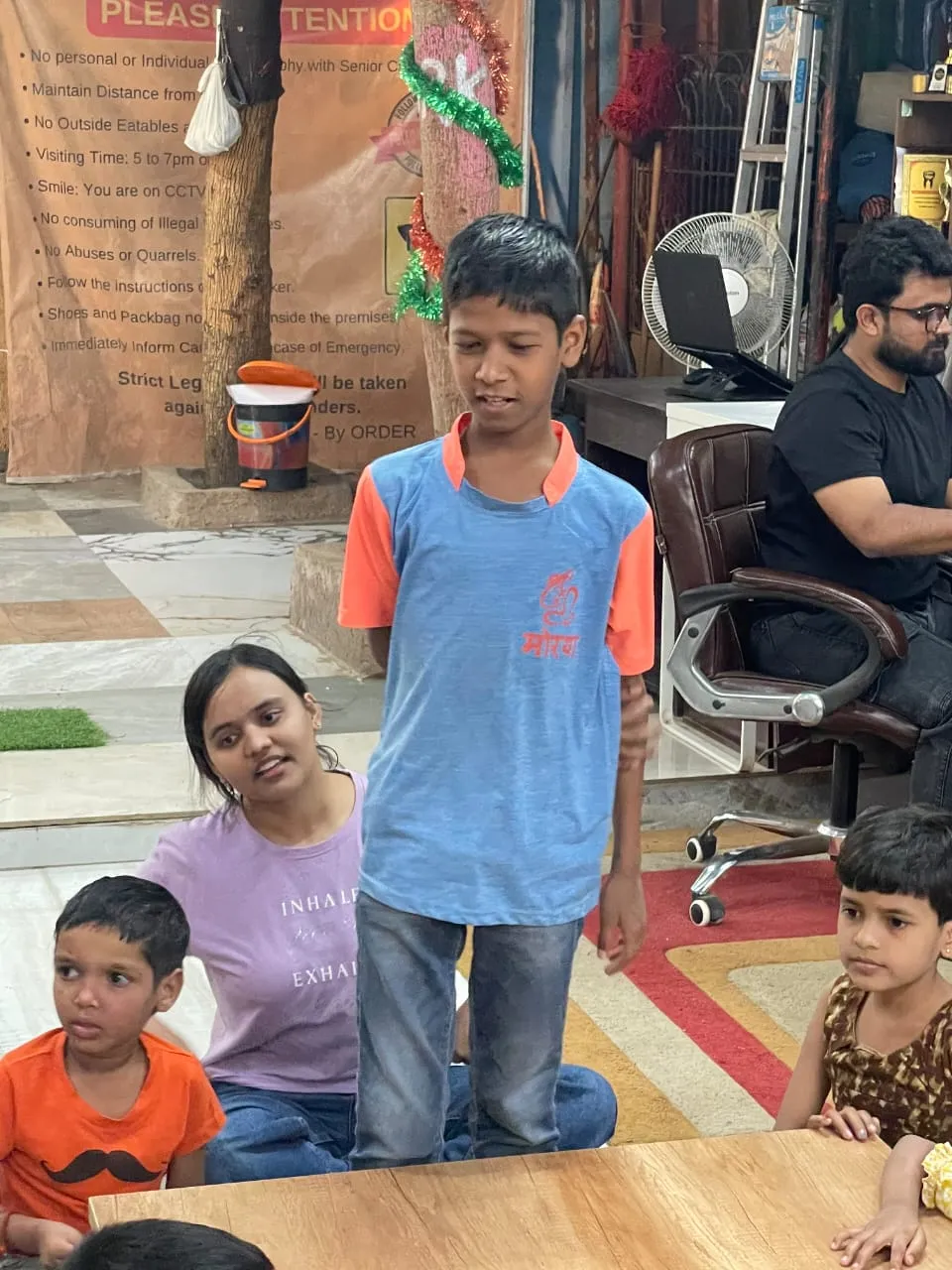
As times change, we are also seeing a global loneliness epidemic in younger generations, and here at EVAK, we cannot help but think that if every person was allowed and felt as if they could be vulnerable, express themselves, and feel accepted, this wouldn’t have such an impact on our lives. What difference can we make to foster real, genuine connections around us?
If every person felt safe enough to express themselves without editing and to show vulnerability without fear, the need to “fit in” might finally give way to something more powerful: genuine connection. That’s the difference we’re hoping to make with one conversation, and one act of acceptance at a time.